





Pulse
06 Jul 2026
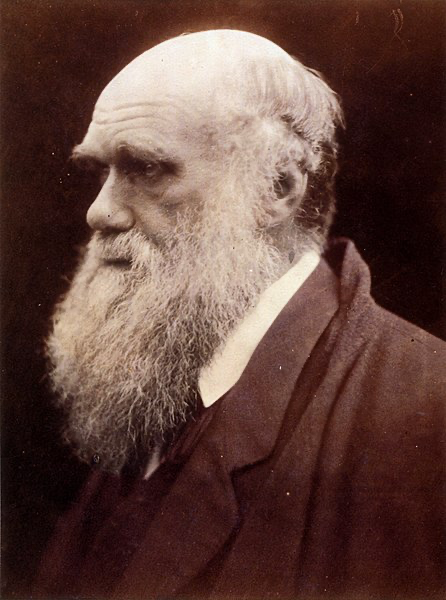
In 2013, Steve Meyer, an advocate of Intelligent Design (ID) and a leading figure at the Discovery Institute, published Darwin’s Doubt: The Explosive Origin of Animal Life and the Case for Intelligent Design. Meyer argues that Darwin’s theory of evolution by natural selection is unable to adequately explain the emergence of biological complexity during the Cambrian explosion which took place roughly 530 million years ago.
Since its formal articulation in the 19th century by Charles Darwin, the theory of evolution by natural selection has become the reigning orthodoxy in biological research, education, and public discourse. Furthermore, Darwinian evolution continues to influence a wide range of scientific inquiry, including genomics and molecular biology, ecology, developmental biology, medicine and epidemiology.
This seems to affirm the truth of the iconic declaration by prominent geneticist and evolutionary biologist Theodosius Dobzhansky (1900-1975) that ‘Nothing in biology makes sense except in the light of evolution.’
Many prominent theologians have also embraced evolutionary theory, even while rejecting a strictly naturalistic interpretation of selection. Among them are Jürgen Moltmann, Wolfhart Pannenberg, Alister McGrath, Rowan Williams, and Keith Ward – to name but a few.
My own approach to Darwinian evolution is less sanguine. However, this article is not about my reservations about the theory.
In recent years, a number of scientists and philosophers have openly expressed their view of the inadequacies of Darwinian evolution which had resulted in some abandoning it altogether. This article briefly looks at why a select group of scientists and philosophers – all of whom are atheists – are doubting Darwin.
In 2010, Jerry Fodor, a philosopher and cognitive scientist at Rutgers University, co-authored What Darwin Got Wrong with Massimo Piatelli-Palmarini, an Italian scientist at the University of Rome. They argued persuasively that ‘there’s something wrong – quite possibly fatally wrong – with the theory of natural selection.’
Fodor and Piatelli-Palmarini observed that neo-Darwinism is forced into ‘searching implausibly large spaces of candidate solutions’ to complex biological problems. What do they mean by this?
Evolution is a process of random mutations filtered through natural selection. It is highly improbable for this blind process to chance upon a few specific DNA sequences that could solve highly complex biological problems such as building an eye or a brain.
Put differently, Darwinian evolution has failed to adequately explain how very complex biological organisms and systems come about.
Another problem with the theory of evolution is the fossil records upon which it is so dependent. In his 2009 book, The Deniable Darwin, the philosopher, molecular biologist, and mathematician, David Berlinski, elegantly critiques the Darwinian theory thus:
The facts in favour of evolution are often held to be incontrovertible: prominent biologists shake their heads at the obduracy of those who would dispute them. Those facts, however, have been rather less forthcoming than evolutionary biologists might have hoped. If life progressed by an accumulation of small changes, as they say it has, the fossil record should reflect its flow, the dead stacked up in barely separated strata. But for well over 150 years, the dead have been remarkably diffident about confirming Darwin’s theory … there are gaps in the graveyard, places where there should be intermediate forms but where there is nothing whatsoever instead.
While Berlinski is a self-professed secular Jew, I am not clear of the religious affiliations of the next scientist that I will be discussing, who concurs with Berlinski’s observation. In his 1999 book, Sudden Origins, Jeffrey H. Schwartz, an anthropologist at the University of Pittsburgh, notes that:
Given that evolution, according to Darwin, was in a continual state of motion … it followed logically that the fossil record should be rife with examples of transitional forms leading from the less to the more evolved.
However, he adds:
Instead of filling in the gaps in the fossil record with so-called missing links, most palaeontologists found themselves facing a situation in which there were only gaps in the fossil record, with no evidence of transformational intermediaries between documented fossil species.
I.L. Cohen, a member of the New York Academy and an officer of the Archaeological Institute of America, put this bluntly in his 1984 book, Darwin was Wrong: A Study in Probabilities:
… every single concept advanced by the theory of evolution (and amended thereafter) is imaginary and it is not supported by the scientifically established facts of microbiology, fossils, and mathematical probability concepts. Darwin was wrong.
There is the old saying – at once foolish and poignant – that an explosion in a printing company will not produce the Oxford Dictionary.
When used in regard to the theory of evolution, the saying is ‘foolish’ in that it fails to understand the nature of evolution as Darwin described it (evolution is a gradual process, not an explosion). But it is also poignant because it draws out out the philosophical intuition that it is highly improbable for random processes to produce an order of such great complexity that nature presents itself to be.
More thinkers are beginning to explore the possibility of design as they reflect on the natural order. In an interview with Gary Habermas in 2004, the philosopher Anthony Flew expressed his attraction to the design argument:
It now seems to me that the findings of more than fifty years of DNA research have provided materials for a new and enormously powerful argument to design.
But the most articulate non-theistic (i.e., atheistic) defender of ID is the eminent philosopher Thomas Nagel, who, before his retirement in 2016, was professor of philosophy and law at New York University. In his brilliant 2012 book, Mind and Cosmos: Why the Materialist Neo-Darwinian Conception of Nature is Almost Certainly False, Nagel writes:
It is no longer legitimate simply to imagine a sequence of gradually evolving phenotypes, as if their appearance through mutations in the DNA were unproblematic – as Richard Dawkins does for the evolution of the eye.
Nagel is therefore drawn to ID, leading him to argued in his 2008 article that teaching ID in public schools is ‘constitutionally defensible’.
There is also the politics side to all this.
Towards the end of the first half of the last century, Karl Popper argues that falsification is an important aspect of scientific inquiry, which he regarded as the demarcation criterion between science and non-science.
For Popper, the scientist must not try to prove a theory to be true. He or she must instead formulate it so that it can be shown to be false if it does not correspond to reality, and then actively attempt to falsify it.
In March 2014, Wolf-Ekkehard Lönning, a scientist, who, until his retirement, worked at the Max-Planck Institute, told Diplomacy Post that ‘the idea of slow evolution by infinitesimally small inherited variations … has been falsified by the findings of palaeontology … as well as genetics.’
However, adherents of Darwinian evolution have rejected these scientific proofs against the theory. Thus, adds Lönning, ‘in fact, their theory has become a non-falsifiable worldview, to which people stick in spite of all contrary evidence.’
In their book, Fodor and Piatelli-Palmarini state that they were duly warned that ‘even if Darwin was substantially wrong to claim that natural selection is the mechanism of evolution, nonetheless we shouldn’t say so.’ They add: ‘to do that is, however inadvertently, to align oneself with the Forces of Darkness whose goal is to bring Science into disrepute.’
To be clear, these scientists and philosophers believe in microevolution, a phenomenon which is typically observable and scientifically testable. What they reject is macroevolution, the grand Darwinian narrative of evolutionary change at or above the level of species, resulting in speciation and the diversification of lineages.
The questions raised by these atheistic and agnostic philosophers and scientists about the credibility of Darwinian evolution should give Christians pause. Darwinian evolution is not an unassailable theory. This should alert Christians to be cautious about being too eager to marry theology to a scientific theory such as evolution.
One of the most eminent theologian-scientists in the Roman Catholic Church is Fr. George Coyne, the Director of the Vatican Observatory. These words, attributed to Fr Coyne, should serve as a warning to all Christians, especially theologians:
The theology that weds the science of today is the widow of tomorrow.
 Dr Roland Chia is Chew Hock Hin Professor at Trinity Theological College (Singapore) and Theological and Research Advisor of the Ethos Institute for Public Christianity.