




Feature
15 June 2026
The decision to allow the staging of Jesus Christ Superstar in Singapore has generated considerable discussion within the Christian community. Some have welcomed the production as an artistic work. Others have expressed disappointment and concern. For many outside the Christian faith, the strength of these reactions may seem difficult to understand.
It may therefore be helpful to explain why many Christians – Catholic, Protestant and Orthodox alike – still find the musical uncomfortable, more than fifty years after its premiere in 1971.
The concern is not primarily about theatre, music, or artistic expression. Christians have a long tradition of engaging the arts. Some of the world’s greatest works of art, music, literature and architecture were inspired by Christianity itself.
The concern lies in what the show is actually about.
Jesus Christ Superstar is not simply a story inspired by Christian themes. It is a work literally named after and centred upon Jesus Christ Himself. It presents the final days of His life, yet does so through a lens that many Christians believe fundamentally alters who Jesus is.
The musical portrays Jesus largely as a tragic, conflicted and deeply human figure. His divinity is left ambiguous. Most significantly, the story concludes with the Crucifixion and leaves the Resurrection unaddressed.
For Christians, this is not a small detail.
The Resurrection is not an optional appendix to the Christian story. It is the very heart of the Gospel. As St Paul puts it,
“if Christ has not been raised, then our preaching is in vain, and your faith is in vain.” (1 Corinthians 15:14, RSVCE).
Christianity does not merely teach that Jesus was a wise teacher, a moral reformer, or an inspiring prophet. It proclaims that He is the incarnate Son of God who died and rose again for the salvation of the world. When Christ is presented primarily as a human figure while His divinity and Resurrection are left unresolved, many Christians understandably feel that the portrayal no longer reflects Christianity as they understand it.
Beyond the question of the Resurrection, there’s also the broader framing of the story. Much of it is told through the perspective of Judas Iscariot, whose doubts and questions shape much of the narrative. Jesus is presented as a charismatic and compelling figure, but one who appears uncertain of His mission and overwhelmed by events unfolding around Him. While such dramatic choices may serve artistic purposes, many Christians believe they sit uneasily with the Gospel accounts, which portray Jesus as fully aware of His identity and freely embracing His mission in obedience to the Father. For this reason, Christian concerns extend beyond what the musical omits to the way it reimagines who Jesus is.
This explains why debates surrounding the musical have persisted from its debut in the early 1970s until today. While some Christians have engaged with it as a cultural work and a starting point for conversation, others have found its portrayal of Jesus deeply troubling. The concerns are not new. They are rooted in theological questions that have accompanied the work for more than five decades.
At the same time, it is important to recognise that Singapore is a secular state governing a religiously diverse society. The Government has responsibilities not only to Christians, but also to people of every faith and of none. It must balance competing interests, including artistic expression, public order, social harmony and religious sensitivities.
Reasonable people may differ on where that balance should be struck.
Yet in a plural society like ours, it should not surprise anyone when communities react strongly when beliefs they hold sacred are portrayed in ways they may not recognise as their own. Whether one is Christian, Muslim, Hindu, Buddhist, Sikh or of another faith tradition, there are certain convictions that lie at the very centre of one’s religious identity. When these are reinterpreted or presented in ways that believers regard as inaccurate, strong reactions are natural and should not be automatically dismissed as intolerance.
Respecting diversity doesn’t mean agreeing with everything. But it does mean trying to understand.
You do not need to be Christian to appreciate why Christians would be uneasy with a portrayal of Jesus that leaves the Resurrection unaddressed. In the same way, Christians should seek to understand why members of other faith communities may be concerned when figures, symbols or beliefs they hold sacred are portrayed in ways they regard as offensive or misleading.
Having spent years in the interfaith space, including through the People’s Association Integration Council, the National Steering Committee on Racial and Religious Harmony and chairing the MCCY GPC, I have come to appreciate just how unusual Singapore is.
In many societies, religion is treated either as a purely private matter or as a source of political division. Singapore has chosen a more difficult path. We recognise that faith remains an important part of many people’s identities, while also insisting that people of different beliefs must learn to live, work and flourish together.
This harmony did not emerge by accident. It has been built patiently and slowly, over generations, through endless conversations, small acts of respect, and communities choosing restraint even when they disagree strongly
Yet harmony should never be mistaken for the absence of tension. New strains continually emerge. Global conflicts show up on our phones. Identity politics crosses borders easily. Cultural values shift. What feels like artistic expression to one group can feel like an attack on something sacred to another.
The public square is therefore one of the most challenging spaces in any society. It cannot belong exclusively to any one community, nor should it exclude communities from participating in it. It must be expansive enough to accommodate diverse viewpoints, yet not so boundless that deeply held beliefs and social cohesion get trampled.
Getting that balance right will always be hard.
There will be occasions when the decisions reached by public authorities do not fully satisfy any side. There will be moments when believers feel disappointed, and other times when advocates of greater artistic freedom feel constrained. Such tensions are not necessarily signs of failure. More often, they reflect the complexity of holding a diverse society together.
Singapore’s strength has never been in making these tensions disappear. Rather, it has been our ability to find balance within them; to discover harmony amidst the chaos. That requires wisdom from our leaders, maturity from our communities, and a willingness from all of us to see issues through our neighbours’ eyes, not just our own.
For Christians, how we respond matters just as much as the issue itself.
We should be clear and confident in explaining why the portrayal troubles us. We should help educate fellow believers, especially younger Christians, about the central truths of the faith and why the Resurrection remains indispensable to the Christian message.
At the same time, our response must be marked by charity, humility and restraint.
Christians have never been called to respond to cultural disagreement with anger or hostility. Christ calls us to be “salt of the earth” and “light of the world”, bearing witness to the truth while loving those who disagree with us.
Some Christians will choose not to watch the musical. Others may engage with it critically and thoughtfully. Individuals will make different prudential judgments. What should unite us is a renewed commitment to proclaiming the real Jesus Christ – not merely as a historical figure, but as the crucified AND risen Lord.
Ultimately, the strongest Christian response to an incomplete portrayal of Christ is not outrage, but faithful witness.
If the musical has prompted a fresh conversation about who Jesus is, then Christians should meet that moment not just with concern, but also with an invitation: to encounter the Christ of the Gospels, the Christ of the Church, and the Christ who continues to change lives today.
Understanding each other doesn’t mean we’ll agree. But it’s often the foundation on which trust is built. And in a society as diverse as ours, that trust is one of the most precious things we have.
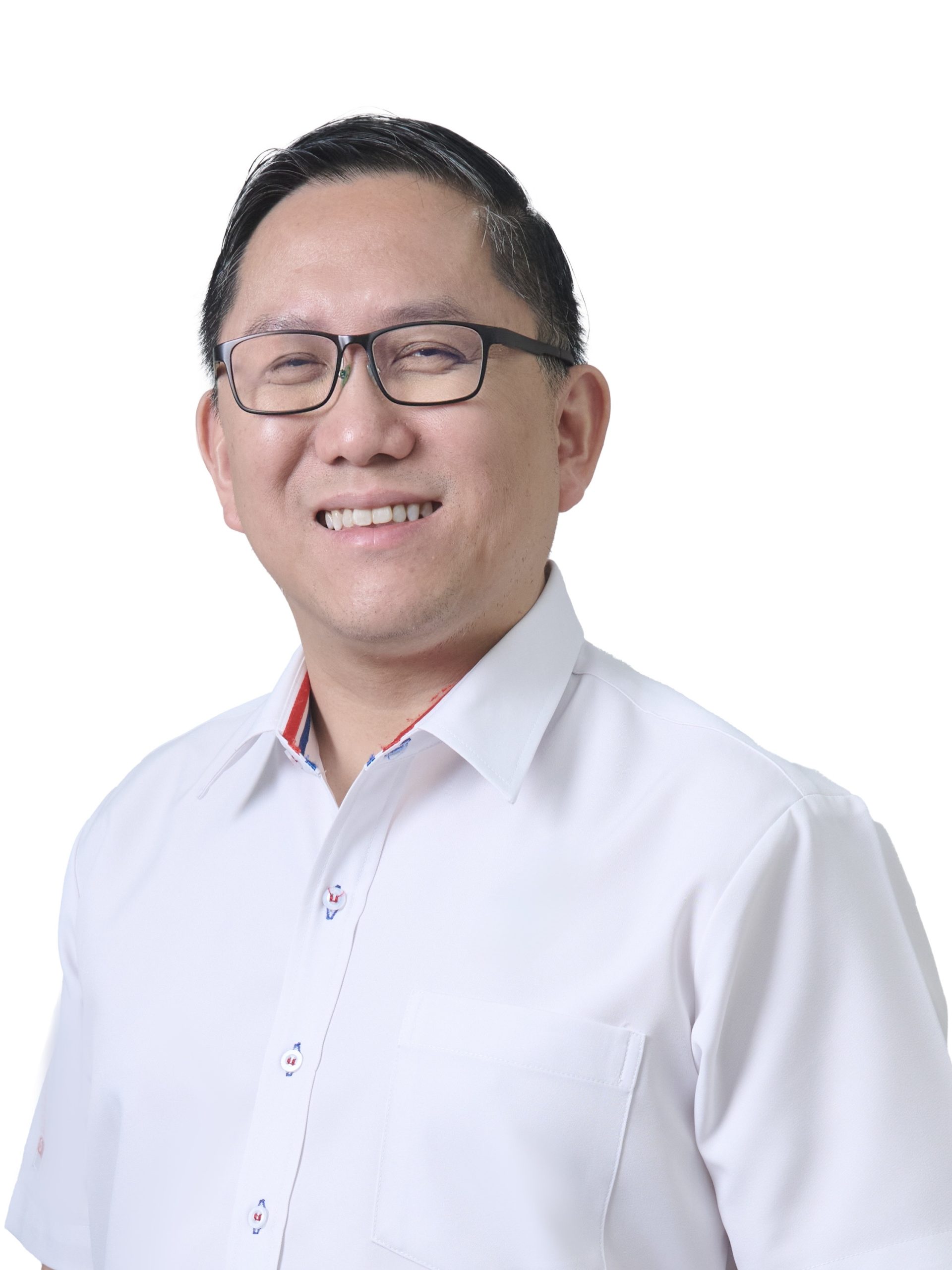 Alex Yam serves as Mayor of North West District and a Member of Parliament for Marsiling-Yew Tee GRC. A lay member of the Order of Malta, he is Asia-Pacific coordinator for the International Catholic Legislators Network and Director of Catholic News Singapore. He is the author of Following Christ in the Public Square.