















Feature
06 Apr 2026
Following the worldwide COVID pandemic, great attention has been given to the issue of mental health, due to the stress experienced by many from an extended time of isolation, worry over career and finance, the possibility and impact of infection, along with challenges in interpersonal relationships, etc.
Mental health challenges are not, however, new; with stress-related burnout being on the minds and lips of many – from medical personnel to caregivers, entrepreneurs to engineers, not to mention counsellors and pastors – ever since Herbert Freudenberger coined the term “burnout” in the 1970s.
None is immune or exempt from the stressors of life, not even our biblical heroes of the Faith.
Consider Jesus and His disciples, who preached to hostile audiences and persecutors, and more often reviled than appreciated. Cast out and imprisoned, whipped and stoned, denied and crucified, their life stressors were considerably greater than any we might face.
While it is undeniable that modern science has revealed that there could be real underlying medical conditions, the question we want to ask is this: some people crumble under the stress, but not Jesus, not to mention the majority of the apostles, the Patriarchs of old, or the many disciples who came after. Why was this so? How did they stay strong? What sustained them?
I propose that it was because they had I.C.E. in their veins – that is, they were certain of their Identity in God the Father, had absolute Confidence in His love and might, and full assurance of His Empowerment of their lives.
Identity
Stressors in life: feeling unappreciated or disrespected, being subject to unfair or demeaning treatment, the strife for success and recognition, outright persecution and abuse, can have a negative impact on one’s self-esteem and result in compromised decision-making in an effort to please.
Jesus and His disciples had their fair share of these experiences. For example, Jesus was dishonoured in His own hometown (Mark 6:1-6), and Peter and John were commanded by the Sadducees and all of high-priestly descent to no longer speak of Jesus Christ to the masses (Acts 4:1-31).
None of these negative experiences overly affected them, because their self-worth rested not on their own ability or achievements, or the recognition and accolades of others, but on their identity as precious and beloved children of God (Isaiah 43:4), created for good works (Ephesians 6:10).
Our identity as God’s children rests not on “deeds which we have done in righteousness, but according to His mercy, by the washing of regeneration and renewing by the Holy Spirit, … so that being justified by His grace we would be made heirs according to the hope of eternal life” (Titus 4:5 and 7).
All who call on the name of Jesus “are children of God, and if children, heirs also, heirs of God and fellow heirs with Christ, if indeed we suffer with Him so that we may also be glorified with Him” (Romans 8:16-17).
Our identity as children of God does not change in the face of, and regardless of the stressors in life. It strengthens us in the face of discouragement and attempts (deliberate or otherwise) to crush our spirits and disparage our opinions.
Confidence
Along with stressors which assail our identity, other challenges batter our confidence. For example: unclear directives resulting in an unfair distribution of work, taking too much upon ourselves – be it because of perfectionism or the need to control, not to mention isolation and marketplace politics.
Most of us have tried to navigate these storms in our own might, and have unvaryingly come to the realisation that some storms are just beyond our finite selves to overcome. Failure, though part and parcel of life, is stressful, and repeated failure can seriously impair our confidence.
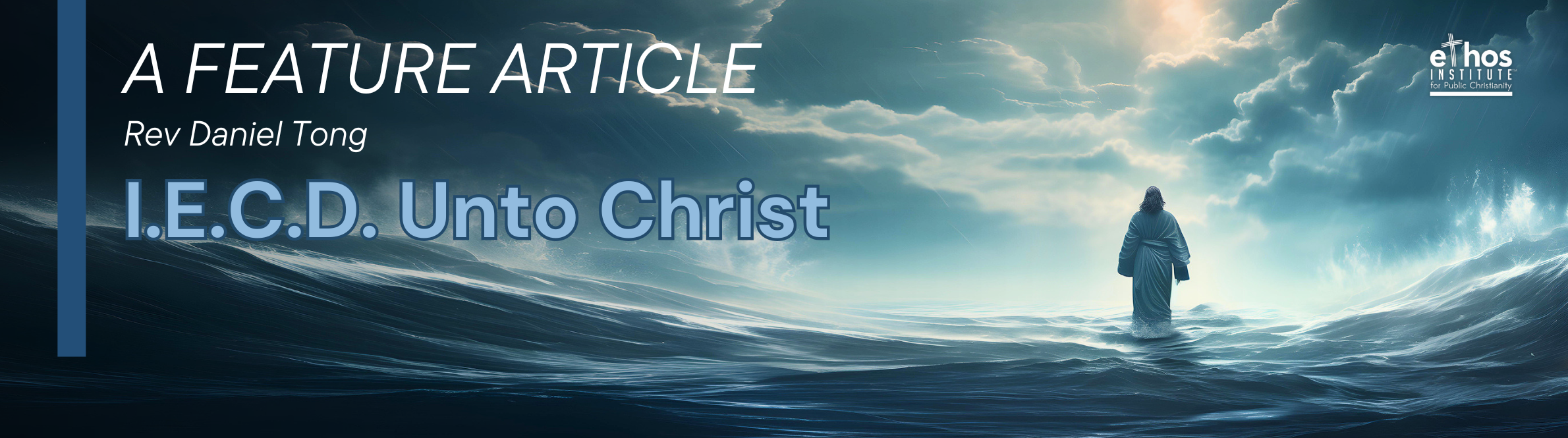
To address this battering of our confidence, consider the narrative of Jesus walking on water (Matthew 14:22-33). When Peter witnessed this, he asked to do likewise, and upon Jesus saying, “Come!” he got out of the boat and walked on water.
All was well, till Peter took in the wind-battered waves, upon which he began to sink into the sea. While his eyes were on Jesus, Peter had no difficulty walking on water in the storm, his confidence resting not on his frail humanity, but on Jesus’ word, “Come!” In other words, he had no difficulty when his confidence was in Jesus!
In the face of the storms of life, let our confidence to manage and overcome the challenges and stressors we face rest not on ourselves – our finite ability and might – but on our Lord God Almighty, in whom nothing is impossible (Luke 1:37; Mark 10:27), who leads and bids us “Come!”
Empowerment
In addition to the above-mentioned stressors, we also often experience unmanageable workloads and immense deadline pressures, and the challenge of striking a good work-life balance. These stressors can lead us to take foolish risks, or take out our frustration (and failures) on others, or even lose hope.
Stress and fatigue, a daily experience for most, can overwhelm us. But must they? Remember, we are not alone. God the Holy Spirit abides with us as our Helper (John 14:16-17), guides us into all truth and discloses to us what is to come (John 16:13-14).
All who join themselves to God are temples of the Holy Spirit (1 Corinthians 6:17 and 19) – the same Spirit who created the world (Genesis 1), and vests us with spiritual Fruit (Galatians 5:22-23) and Gifts (1 Corinthians 12:4-11). With the ultimate source of power in the universe by our side, what may we not overcome?
Regardless of the task or challenge, the Holy Spirit will help us distinguish the spirits (1 Corinthians 12:10), convict us of sin and righteousness and judgement (John 16:8). The Spirit enables us to discern the right way of getting things done, imbuing us with creativity and ability (c.f., Exodus 31:1-6). What may we then lack or fear?
In the face of the stressors of life, our Identity as a child of God the Father secures us, our Confidence in the leading of God the Son helps us overcome the storm, and the Empowerment of God the Holy Spirit strengthens and sustains us.
Deference
We imperfect human beings struggle to live these out, especially in the face of the world’s constant challenge to our self-worth (e.g., benchmark of beauty). We are also inclined towards self-reliance and self-confidence.
Like the Patriarchs and disciples of Christ who serve as examples of works-in-progress growing and being strengthened with I.C.E. in their veins as they showed greater and greater Deference to our Lord God with each passing day, Jesus is the ideal we are called to imitate (Ephesians 5:1-4).
Let us not be like Peter, who took his eyes off of Jesus in the midst of the storm and began to sink. Let us be like our Lord Jesus Christ, who showed submitted Himself to the leading of the Holy Spirit (e.g., Luke 4:1-2) and spoke only what His Father commanded Him to speak (John 12:49-50).
The stressors of life are real, and none are exempt from them, but if we are I.C.E.D. unto Christ, what stressors in life may we not overcome (Philippians 4:13)?
 Rev. Daniel Tong is currently Vicar of Saint Andrew’s Community Chapel and a graduate of Trinity Theological College.